
Introduction
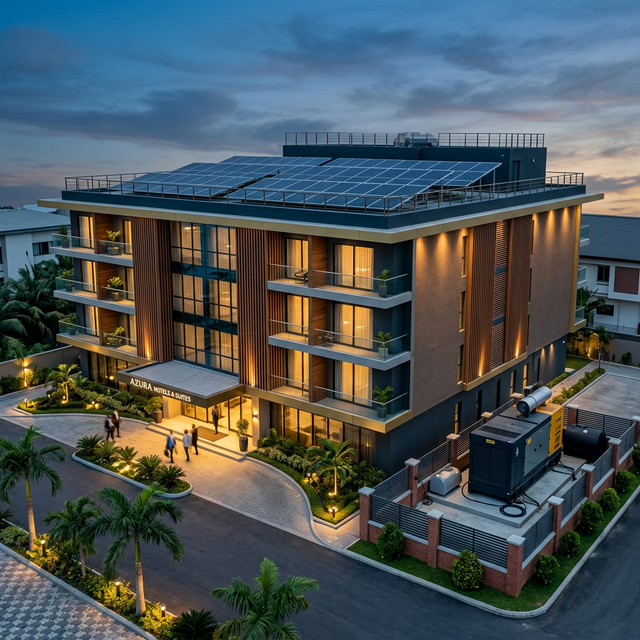
Nigeria’s unstable power reality is no secret to anyone running a hospitality business today. With grid power being unreliable and tariff prices skyrocketing, hotels are forced to rely heavily on backup generators.
As a result, diesel has become the single biggest operating expense for most accommodations, eating directly into gross operating profits and threatening the sustainability of the business.
Why Energy Costs Destroy Hotel Profit
When you break down a hotel’s P&L statement, energy costs dictate survival. Here’s why they tend to spiral out of control:
- Unoptimized Generator Runtime: Running a 250kVA generator at 20% load during the day just to power a few TVs and laptops is a massive waste of diesel.
- AC Systems: Old, non-inverter air conditioning units draw massive starting currents and run inefficiently.
- Poor Load Planning: Failing to segregate critical loads (servers, front desk, security) from heavy loads (A/C, water heaters) means you always have to run the big generator.
Step 1 — Conduct a Simple Energy Audit
Before spending millions on solar or new generators, you must understand where your power is going.
Checklist:
- Identify heavy appliances: Kitchen ovens, laundry machines, and old A/C units.
- Track generator hours: Keep a strict daily log of when the generator is turned on, turned off, and the fuel consumed.
- Measure peak usage: Use a clamp meter to find out your true maximum load during a fully booked weekend versus a quiet Tuesday afternoon.
Step 2 — Hybrid Power Strategy
Operating solely on a diesel generator is financial suicide. A hybrid approach is necessary.
- Generator + Inverter: Use a smaller generator to charge a robust inverter battery bank during the day, which then carries the low-demand night hours.
- Solar for Non-Heavy Loads: Install solar panels specifically dedicated to lighting, front desk computers, and internet infrastructure.
- Battery Storage Basics: Lithium-ion batteries have a high upfront cost but last 5-10 years longer than standard tubular batteries.
Step 3 — Smart Operational Changes
Technology is only half the battle; policy is the rest.
- AC Zoning: Isolate A/C power to specific floors so empty rooms aren’t being cooled inadvertently.
- LED Migration: If you still have halogen or incandescent bulbs in chandeliers or corridors, replace them today.
- Auto Shutdown Policies: Mandate that housekeeping turns off all appliances, lights, and water heaters immediately after cleaning a checked-out room.
Common Mistakes
- Oversizing Solar: Buying a massive solar array to run A/Cs on a cloudy day is a poor return on investment.
- Running Generator Idle: Generators running below 30% load suffer from “wet stacking” and consume excessive fuel per kW produced.
- No Monitoring System: You can’t manage what you don’t measure. Guessing your diesel consumption leads to staff theft and inefficiency.
🏨 How Hosila Helps
Hosila isn’t just about checking guests in; it’s about giving owners complete operational visibility.
- Track energy expenses: Log daily diesel purchases directly in Hosila’s expense tracker so you can see cost-per-occupied-room.
- Department cost reporting: See exactly how much maintenance and power is eating into your room revenue.
- Profit visibility dashboard: Instantly view your true profit margins after deducting energy costs, allowing you to make smarter pricing decisions.
Stop running your hotel in the dark. Bring your operational costs to light with Hosila.